Dec-31-2025
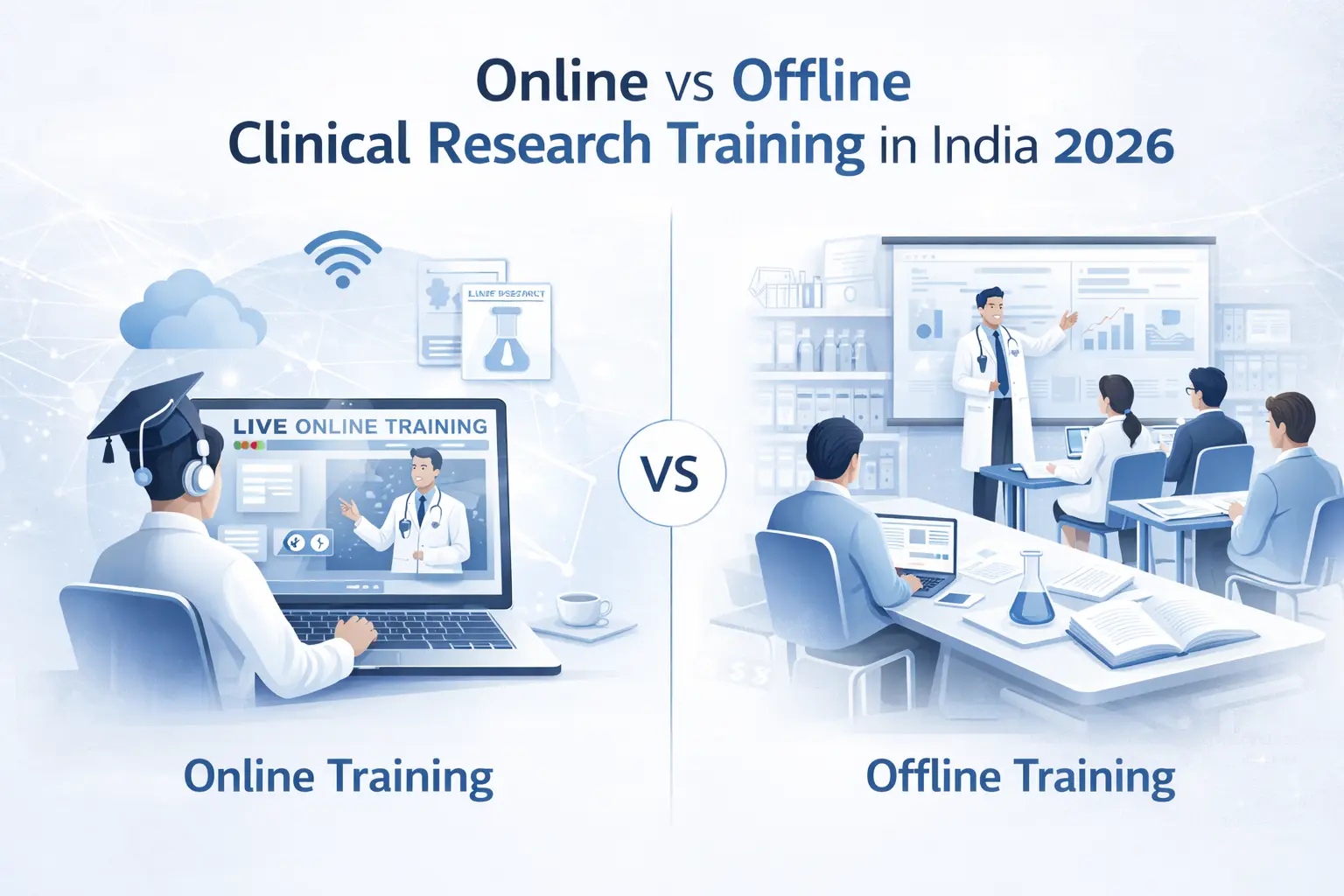
Online vs Offline Clinical Research Training in India
A career in clinical research stands out as a top choice for
pharmacy and life science graduates in India. It
provides global exposure and career stability across multiple roles such as
Clinical Research Coordinator (CRC), Pharmacovigilance Associate, Clinical Data
Management Executive, and CRA Trainee.
However, one major question often confuses freshers once
they decide to enter this field:
Should you choose online clinical research training or an
offline classroom course?
Most of the students believe that the choice is only about
convenience or course fees. In reality, the training mode you choose
directly impacts your job readiness, interview confidence, and chances of job
selection.
This 2026 guide is designed to help pharmacy and life
science graduates to understand which clinical research training mode is
better for them based on learning style, background, and job goals in
India.
Why Training Mode Matters in Clinical Research Careers
The clinical research industry demands skills instead
of theoretical knowledge. As you enter a CRO, hospital or pharmaceutical
company, you are expected to handle real responsibilities such as:
- Regulatory documentation and compliance
- Clinical trial processes and study protocols
- Patient and site coordination (for site job roles)
- Safety reporting and adverse event documentation
- Data handling and communication with monitors, auditors, and internal teams
For freshers, the way these skills are taught matters far
more than the certificates alone. A structured clinical research course in India should prepare candidates to perform confidently entry-level clinical research jobs.
Online Clinical Research Training Is Best Suited For
The acceptance of online clinical research training institutes has grown in India, especially after global CROs and pharmaceutical
companies adopted hybrid and remote work models.
For many learners, online training removes geographical
barriers and allows access to experienced trainers without relocation.
When Online Clinical Research Training Works Well
Online clinical research courses are suitable if you:
- Are a working professional or managing parallel commitments
- Live
outside major training hubs like Pune, Mumbai, or Bangalore.
- Are
comfortable learning through live virtual sessions
- Can
maintain self-discipline and learning consistency
Students from Tier-2 and Tier-3 cities such as Nagpur,
Nashik, Indore, Jaipur, Kochi, Bangalore, and other cities often choose
online training to gain industry exposure without moving to metro cities.
Limitations of Online Training (Be Honest with Yourself)
Online learning is effective yet not ideal for everyone.
Common challenges include:
- Limited
face-to-face interaction with trainers and peers
- Slower
confidence-building for hesitant learners
- Practical
roleplays depend heavily on course design.
Although a high-quality online clinical research course
can deliver strong results if it includes:
- Live
training sessions (not recorded videos)
- Practical
assignments and case study preparations
- Regular
doubt clearing and mentorship sessions
- Structured
interview and placement support
Ultimately, candidates should understand that training
quality matters more than the learning mode.
Offline (Classroom) Clinical Research Training: Who Should Consider It?
Offline classroom training provides a structured and
immersive learning environment, which is beneficial for freshers entering the
clinical research industry.
Why Classroom Training Helps Freshers
Offline clinical research training is often preferred when:
- You
are a complete fresher with no industry exposure.
- You
want to improve communication and professional confidence quickly.
- You
learn better through direct interaction and guided practice.
- You
benefit from peer learning and fixed routines.
Students graduated from B.Pharm, M.Pharm, B.Sc, M.Sc,
Nursing, or Biomedical backgrounds often report that classroom training
helps them understand real workflows, documentation practices, and industry
expectations more clearly.
Challenges with Offline Clinical Research Training
Offline training may not suit everyone because of the fixed
training schedule, or it may demand relocation and a daily commute.
For learners who prefer hands-on guidance and
face-to-face mentoring, offline training significantly improves chances of
getting an early job in clinical research.
Online vs Offline Clinical Research Training: Practical Comparison
|
Comparison Area
|
Online Training
|
Offline Training
|
|
Flexibility
|
High
|
Limited
|
|
Trainer Interaction
|
Depends on live sessions
|
Strong
|
|
Practical Exposure
|
Moderate
|
High
|
|
Cost Impact
|
Generally lower
|
Higher
|
|
Confidence Building
|
Gradual
|
Faster
|
|
Placement Readiness
|
Strong if mentorship
|
Strong
|
There is no universal “best” option. The right choice
depends on how you learn, not what seems convenient.
Which Training Mode Helps in Getting Job Placements?
Both online and offline clinical research training can
support job placement if the course is job-oriented and placement-focused.
The key factors influencing placements are practical exposure, real job assignments, and resume preparation aligned with CRO and pharma expectations. Also, mock interviews, interview mentoring, career
guidance and placement coordination play a vital role in job selection.
India currently contributes to over 5% of global clinical trials, and the demand for trained entry-level professionals continues to rise across CROs, hospitals, and pharmaceutical companies.
Candidates commonly secure entry-level roles such as
Clinical Research Coordinator (CRC), Pharmacovigilance, Drug Safety Associate,
Clinical Data Management Executive, CRA Trainee, etc.
Enrolling in the best clinical research course with
placement support significantly improves interview success, regardless of
delivery format.
Hybrid Clinical Research Training: A Balanced Approach
Many institutes now offer hybrid clinical research
training, which ideally covers Online theory sessions, offline or guided
practical exposure, and live or in-person mock interviews.
This approach works well for students who want flexibility
without missing hands-on learning.
How to Decide the Right Clinical Research Training Mode
Choose Online Clinical Research Training Institute If:
- You
cannot relocate
- You
prefer flexible learning hours.
- You
are comfortable with digital learning.
- You
can stay consistent without physical supervision.
- You
want to save money on travelling, living and food expenses.
Choose the Offline Clinical Research Training Institute If:
- You
are a complete fresher.
- You
want faster confidence-building.
- You
prefer structured classroom environments.
- You
learn best through direct interaction.
- You are
okay with a fixed schedule, travelling or relocation.
One Critical Factor Students Often Ignore
Whether you choose online or offline training, always
evaluate:
- Course
syllabus and job role coverage
- Trainer’s
real industry experience
- Practical
exposure is included in the program.
- Interview
preparation and placement support structure
The goal is not course completion; the goal is job
readiness through structured clinical research training with placement in India.
Why Clariwell’s Training Model Works for Both Online and Offline Learners
The approach towards practical clinical research training is built
around job roles, not delivery formats. Clariwell offers online,
offline, and hybrid clinical research training aligned with real industry
expectations. As it is important to understand that learners come from
different academic and confidence levels.
What differentiates such institutes is their outcome-driven
training model:
- Industry-relevant
syllabus covering CRC, CRA, Pharmacovigilance, CDM, Regulatory and Medical
Coding job roles.
- Live,
interactive training delivered by experienced professionals.
- Practical
assignments and case studies.
- Resume
building, mock interviews, and interview mentoring.
- Structured
placement support with scheduled interview opportunities.
Instead of promoting one mode as superior, Clariwell helps
candidates choose the right training path based on background, confidence
level, and career goals to get job-ready skills.
Frequently Asked Questions (FAQ’s)
Offline training often helps freshers build confidence faster, but disciplined
learners can also succeed through online training if it includes live sessions,
practical exposure, and interview preparation.
Yes. CROs and pharmaceutical companies accept online training when it is live,
practical, and job skills-driven.
Yes. Freshers commonly secure roles such as CRC, Pharmacovigilance Executive,
CDM Associate, and CRA Trainee within 2–6 months when training is
structured and placement-focused.
Yes. Hybrid training offers flexibility along with hands-on exposure, making it
suitable for students from Tier-2 and Tier-3 cities.
Final Takeaway and Conclusion
The best clinical research course in
India is the one that prepares for real job responsibilities,
interviews, and long-term career growth, irrespective of online or offline. Choose your learning environment based on how you learn, not
just based on convenience or fees.
Pharmacy and life science graduates can
confidently enter the clinical research industry with the right guidance and
structured training to build a stable, respected career in India.
Categories
Join With Us
RECENTLY ADDED UPDATES
-
Clinical Research Jobs for Freshers (2026) | Placement Guide
29-Jan-2026
-
Online vs Offline Clinical Research Training in India
31-Dec-2025
-
Best Clinical Research Training Institutes in India (2026)
26-Dec-2025
-
Top Clinical Research Jobs for Freshers in India
11-Dec-2025
-
What is Clinical Research and Career in India (2026)
05-Dec-2025
-
How to get a job in clinical research
28-Jun-2024